Do a search:

Most searched
Fuel price
Pre-salt
Team Petrobras
O uso deste material é autorizado apenas para fins editoriais.
Petrobras announces progress in initiatives for the Energy Transition
Sustainability Report presents investments, decarbonization initiatives and social inclusion
Ehder de Souza / Petrobras News Agency
2024 Sustainability Report provides a portrait of Petrobras' progress in its journey towards the Fair Energy Transition
Download 2024 Sustainability Report provides a portrait of Petrobras' progress in its journey towards the Fair Energy TransitionOn Monday, June 16, Petrobras launched its Sustainability Report, providing a portrait of the company's progress in its journey towards the Fair Energy Transition in 2024. The investment of US$ 16.3 billion in low-carbon projects over the next 5 years, the generation of 315,000 jobs in the same period and the reduction of 40% in absolute CO2e emissions since 2015. In addition, the Report highlights the distribution of BRL 379.4 billion in value to society in the last year and the investment of BRL 350 million in the Programa Autonomia e Renda (Autonomy and Income Program) over four years, an initiative that materializes the commitment to social inclusion and that began qualifying more than one thousand students in seven states.
In addition to Petrobras Podium Carbon Neutral gasoline for light vehicles and R5 Diesel for heavy vehicles, both launched in 2023, Petrobras is investing in the construction of dedicated biorefining plants for the production of sustainable aviation kerosene (SAF) and renewable diesel at the Presidente Bernardes Refinery (RPBC) in Cubatão, with a capacity of 15,000 barrels per day (bpd) and at the Boaventura Energy Complex with a capacity of 19,000 bpd, both scheduled to start operations after 2029. The implementation of a plant at the Paulínia Refinery (REPLAN) with a capacity of 10,000 bpd for the production of SAF via the Alcohol-to-jet (ATJ) route, which uses ethanol as a raw material, is also under study.
Another advance was the three field tests of marine fuels with lower carbon intensity. In tests with 24% biodiesel, the potential reduction in greenhouse gas (GHG) emissions was observed, ranging from 17 to 20% compared to 100% mineral bunker. The product was certified by the International Sustainability & Carbon Certification, which authorized Petrobras to market the VLS B24 certified product in 2025. The company is also marketing marine gas oil with a maximum sulfur content of 1,000 mg/kg (LSMGO – Low Sulfur Marine GasOil), at the port of Santos. This content is significantly lower than the regulated limit of 5,000 mg/kg.
In addition to its own decarbonization initiatives, Petrobras works in national and international partnerships with other companies with actions aimed at improving air and fuel quality. One such partnership is with the Oil and Gas Climate Initiative (OGCI), which is made up of 12 of the world's leading energy companies: BP, Chevron, CNPC, ENI, Equinor, Exxon Mobil, OXY, REPSOL, Saudi Aramco, Shell and Total, in addition to Petrobras. Petrobras' commitment to the OGCI is to reduce its net operational emissions to zero by the deadlines set by the Paris Agreement. OGCI members have collectively reduced their methane emissions by 55% and their carbon intensity by 21% since 2017.
Emissions offsets from carbon credits can be used as a complementary tool for decarbonization. In 2024, Petrobras invested in the voluntary carbon credit market, acquiring a new batch of 270,000 credits from the REDD+ Envira Amazônia project. The credits are from the 2020 and 2021 harvests and certified according to the standard called VCS (Verified Carbon Standard) from Verra, the largest voluntary carbon market certifier in the world, with gold level certification for the Climate, Community & Biodiversity (CCB) standard for Adaptation to Climate Change, Biodiversity and Community. The credits acquired in this initiative were used to offset emissions from the new Podium Carbon Neutral gasoline.
The decarbonization result in the company's operations is another highlight in the Sustainability Report. When compared to 2015 data, there was a 40% reduction in absolute CO2e emissions and a 69% reduction in direct upstream methane emissions. This progress reinforces Petrobras' ambitions to achieve Net Zero by 2050, Near Zero Methane by 2030 and maintain net neutral growth by 2030.
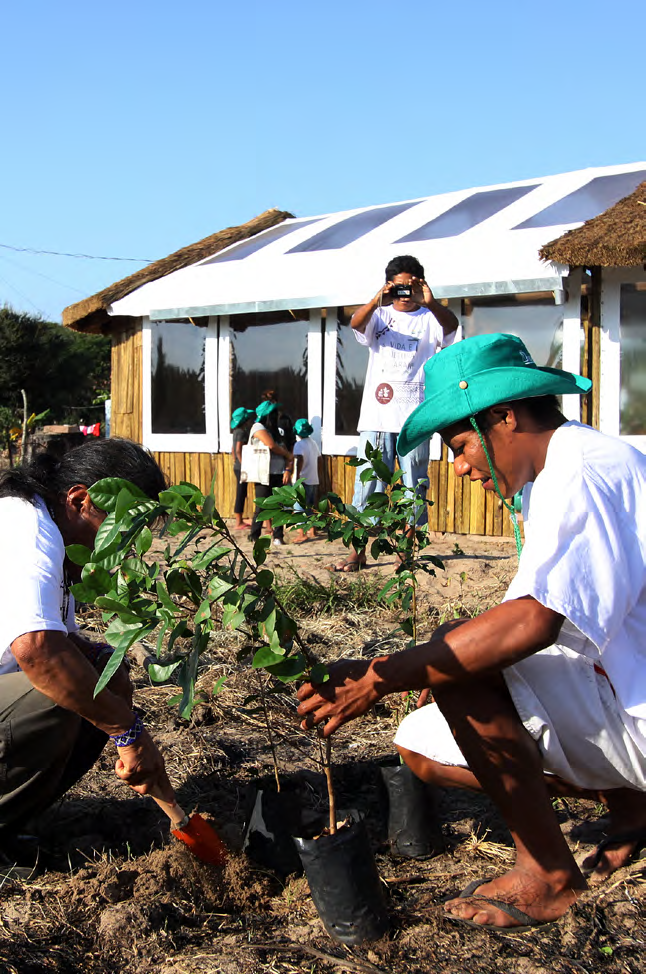
The 25 projects focused on Forests under the Petrobras Socioenvironmental Program, in effect in 2024, worked on the recovery or direct conservation of more than 535,000 hectares of forests and natural areas in the Atlantic Forest, Amazon, Caatinga, Pampa and Cerrado, contributing to the mitigation of GHG emissions. The estimated net incremental benefit of this work is approximately 3 million tCO2e, and considers the net removal and emissions avoided by actions that prevent deforestation. Another voluntary investment front in forests is the Floresta Viva initiative, in which BRL 49.1 million was invested in that year.
The economic performance brought positive impacts to society with the distribution of BRL 379.4 billion through taxes, royalties and special stakes, direct and shareholder remuneration and payments to financial institutions and suppliers. For the coming years, the initiatives foreseen in the Business Plan 2025–29 should generate around 315,000 jobs. Petrobras estimates that in 2024, investments in the E&P segment, which totaled 13.91 billion dollars, supported 145,000 jobs in the country through local procurement and its positive impact on the supply chain.
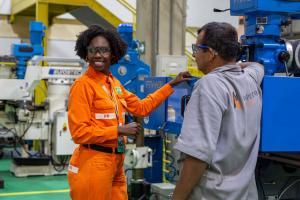
As a result of the investment in workforce training and social inclusion of the Petrobras Programa Autonomia e Renda (Autonomy and Income Program), last year was marked by the beginning of professional qualification classes for 1,065 students in the seven states. Approximately 72% of the students are black and brown people, 60% are women and 4% are people with disabilities. Graduates are advised to register with the Sistema Nacional de Emprego – SINE (National Employment System) or Posto de Atendimento ao Trabalhador – PAT (Worker Assistance Center) in the municipalities covered by the program. Companies that make up Petrobras' supply chain are encouraged to make their job openings available to these agencies in order to expand opportunities for this qualified local workforce.
Photos






Downloads
Text of this article
Text downloadVideos from this article
You may be interested in



Use our search to find what you are looking for
Do a search:
Most searched
Fuel price
Pre-salt
Team Petrobras
Browse the Sections:
Choose a channel:
Do a search:
Most searched
Fuel price
Pre-salt
Team Petrobras
Accessibility:
Language:
Select a language: