Do a search:

Most searched
Fuel price
Pre-salt
Team Petrobras
O uso deste material é autorizado apenas para fins editoriais.
Petrobras improves the performance of its waste and water collection management
The Sustainability Report indicates advances in Solid Waste Management by investing over BRL 800 million in social projects
Flávio Emanuel / Petrobras’s Image Bank
Petrobras improves the management of waste from its activities and cuts down on freshwater collection
Download Petrobras improves the management of waste from its activities and cuts down on freshwater collectionPetrobras made a substantial improvement in managing waste from its activities. 2023 the company reached 91% of hazardous waste reuse and recycling, contrasting with the 88% attained in 2022. Last year, the generation of dangerous solid waste reached 27.6% below the internal limit set at 110 thousand tons; the generation of non-hazardous solid waste stood at 10.2% below the limit set internally at 160.2 thousand tons.
These improved results are the consequence of Petrobras's circular economy actions and the better management of tank cleaning and maintenance activities, reducing waste generation such as oil sludge. The dangerous waste produced by Petrobras is increasingly undergoing the RRR (Recycling, Recovery, and Reuse) route.
Other sustainability commitments are forging ahead, such as a decrease in the amount of freshwater collected by the company. Last year, Petrobras collected 115 thousand megaliters, a 24% reduction as against the volume in 2021. The target is to reach a 40% reduction by 2030. To meet this commitment, the company relies on roughly 58 reuse-oriented actions and projects, measures to reduce waste of water, and the introduction of alternative water sources. In 2023, the total reuse volume was 35.8 thousand megaliters, sufficient to supply a city of about 650 inhabitants per year. The company estimates that the reuse actions represent annual savings of roughly 16 million worth of water collection costs.
Those commitments are some of the highlights of the 2023 Sustainability Report published by the company this monday (06/10). This document sets out advances in Petrobras’s sustainability commitments and social investments of over BRL 800 million in mandatory and voluntary social-environmental projects, sponsorships, and donations in 2023 alone. Among the social-environmental investments, the company stated that, last year, BRL 159 million were allocated to voluntary social-environmental projects and BRL 566 million worth of mandatory monitoring and compensation programs and projects. Furthermore, it set aside BRL 89 million to sponsor culture, sports, business, science, and technology, plus BRL 2 million for donations.
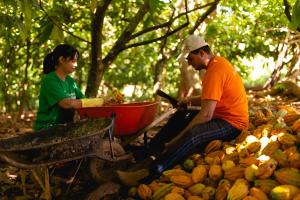
Among the voluntary social-environmental projects, 44 projects of the Petrobras Social-Environmental Program in the Forests and Ocean lines are dedicated to preserving habitats and species aligned with the public biodiversity conservation policies. Those projects monitor, study, or protect over 570 fauna species—82 endangered—including the jaguar, tapir, armadillo, and Muriqui-do-Sul monkey, in addition to species of whales, corals, birds, fish, and turtles. Another 350 flora species—17 endangered—are studied and undergo seed collection and planting initiatives. The supported projects also helped direct recovery and conservation of approximately 350 thousand hectares of forests and natural areas in the Atlantic Forest, Amazon, Caatinga, and Savanna.
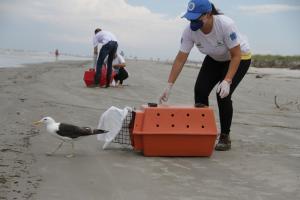
The Sustainability Report also mentioned the contribution of the 50 environmental monitoring programs and projects that assess the health of the marine environment, including different fauna groups. Among those programs are four Beach Monitoring Programs (PMP) maintained by Petrobras. Set up along 3,000 km off the coast of ten states, in the Santos, Campos, Espírito Santo, Sergipe-Alagoas, and Potiguar Basins, those projects analyze the impacts of oil and gas exploitation and production activities on birds, turtles, and marine mammals by monitoring the beach stranding. In 2023, those projects play a pivotal role in identifying early and reporting to the health authorities suspected cases of Highly Pathogenic Avian Influenza in the migratory marine fauna and taking preventive measures to protect the technical staff and the animals through rehabilitation in veterinary facilities.
Other Sustainability Commitments
The Sustainability Report indicates a 41% reduction in greenhouse gas emissions from Petrobras’s activities in 2015 and 4% less compared to 2022. Thirteen million tCO2 were injected, the highest number recorded yearly. Our commitment to operational efficiency and less environmental impacts was also demonstrated in a lower natural gas consumption and a higher total load factor for its refining plants.
Socially speaking, among the improvements is the release of the Programa Petrobras Contra a Violência Sexual e do Programa de Equidade Racial da Petrobras (Petrobras Program Against Sexual Violence and Petrobras Racial Equity Program), which aims to create a better workplace and introduce initiatives to foster an inclusive culture. Today, the company’s staff is composed of 22% women and 22.2% black people in managerial roles.
Our corporate integrity commitments include diversity actions in appointing our corporate stakeholders, integrity and human rights targets, and other ESG aspects of the supply chain.
Photos





Downloads
Text of this article
Text downloadVideos from this article
You may be interested in



Use our search to find what you are looking for
Do a search:
Most searched
Fuel price
Pre-salt
Team Petrobras
Browse the Sections:
Choose a channel:
Do a search:
Most searched
Fuel price
Pre-salt
Team Petrobras
Accessibility:
Language:
Select a language: